
Tight pants
More body, less ease

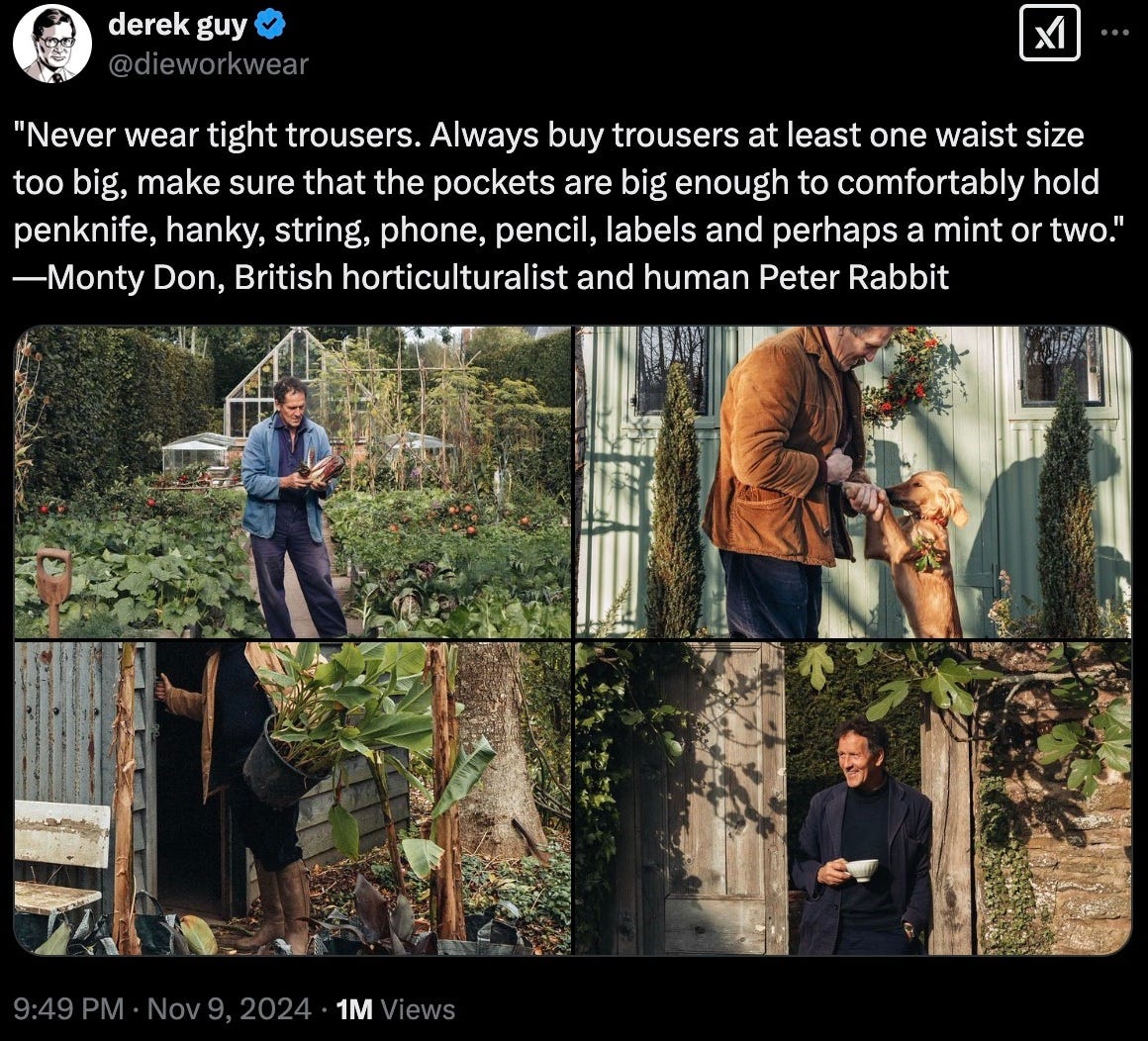
I get it, a tight fit isn’t everyone’s cup of tea. But it is perplexing when I see talk about tight pants as some sort of entirely separate fitting challenge. Not to burst anyone’s bubble but getting a good fit for tight pants is no different than fitting loose pants. It requires no more expertise than for any other type of pant. You can do this with body neutral fitting!
The same fitting principles apply, the crotch seam is still a line, the fabric is still flat, only the design has changed.
So what’s the the deal with tight pants?
The difference between tight pants and looser pants is less ease.
Revelatory, I know!
For background, please read the post on crotch ease.
Design
When we were making the Olive pants, we discussed how trousers occupy a sweet spot on the body-costume spectrum. Precision in fit is often associated with closely fitted clothing. Many assume that a looser fit is more forgiving but it is more demanding because the garment is responsible for defining the silhouette1.
Tighter pants like the Oxbows are more defined by body contours. We are moving away from trousers towards leggings. The good news is this gives us an obvious guide when it comes to customizing the design, namely the silhouette of the body.
Relating Draft to Design
The challenge of tight pants is the challenge of fabric manipulation.
The not-secret secret about woven fabric is that it is flat and passive. We all adore fabric, but maybe we can admit fabric alone can be somewhat boring. It is merely the substrate.
To get fabric to wrap around the body it needs to be coaxed. The stiffer the fabric, the more persuasion has to happen. Again, there is no secret to how this is done, it requires cutting fabric into pieces and stitching it together aka The Cut.
When fabric is following the body contours more closely it has more work to do and needs more persuasion.
For example with a trouser, the fabric can drape right off the buttocks like the water off Niagara Falls.
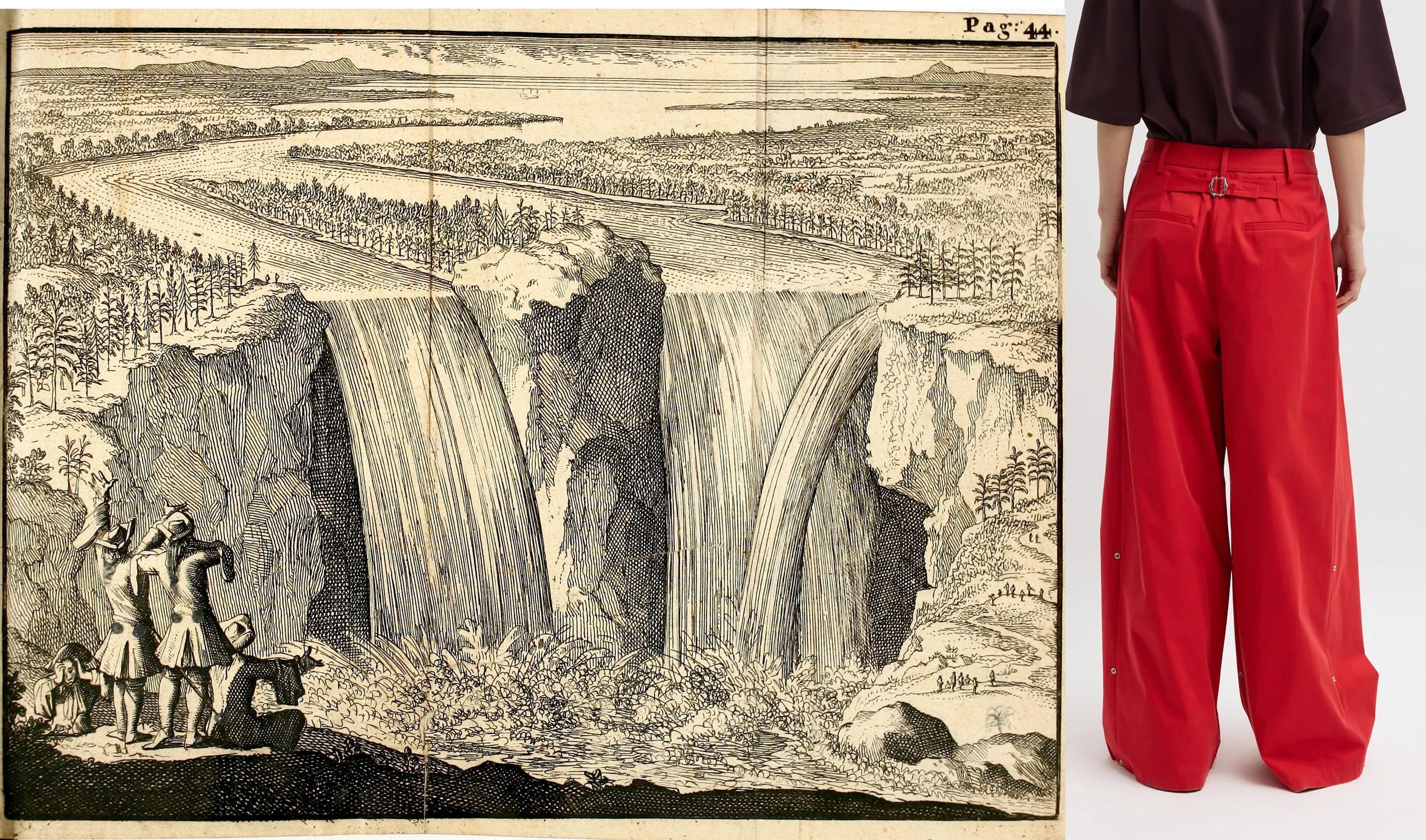
Note in the example above, we can clearly see two legs but it is not clear that the. person has two buttocks.
A closer fit requires the fabric to bend around the butt in two directions and then bend again to go under the buttocks. A tighter crotch seam makes the fact of two buttocks quite obvious for that 🍑 look.
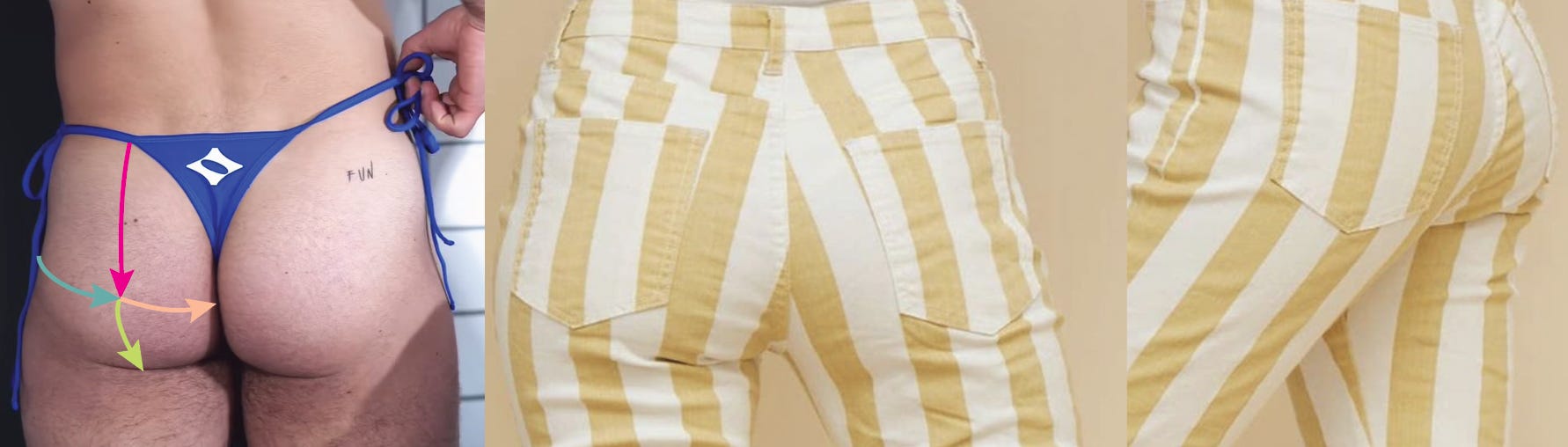
Woven fabric will obligingly bend in one direction, it is not super keen to bend in two directions at the same time. It needs help and this is where the fabric whisperers aka designers come in.
It is important to understand all the ways the draft accomplishes design.
Next up:
Key features of a close fitting pant draft. Plus thoughts on the challenge of fitting tight pants and how you can partner with the draft and be the boss of getting the fabric to bend in all the right places.
Please comment with your thoughts, questions or concerns you want to share about the design, draft, fit or construction of a tight pant.
A reminder for the Oxbow pant MPWM2 live session we have coming up this weekend. This post has all the details.
One of the reasons I think Muna & Broad is such a wonderful pattern company. The skill involved in making oversized garments that are elevated and modern but not sloppy, is very under appreciated.
MPWM Make Pants With Me
This is very helpful, thank you! So, I am pretty new here and haven’t made any pants with you yet. I just finished a pair of Helene Jeans by Anna Allen and they have been a very interesting make. I definitely am on the side of “would rather have tighter fitting pants than not” (lol, I don’t do squats ONLY for health reasons 😉), and yet, reading this article it makes me wonder if that particular pant is actually just drafted for a more relaxed fit and that I would be asking the fabric to do things it doesn’t want to, if seen to be more form fitting. Anyway, it has been an interesting process, also trying to apply my best understanding of TDCO for the first time on these Helene jeans. I got your book and am ready to delve into it.
I love Monty Don-- and his trews ARE always really baggy!